
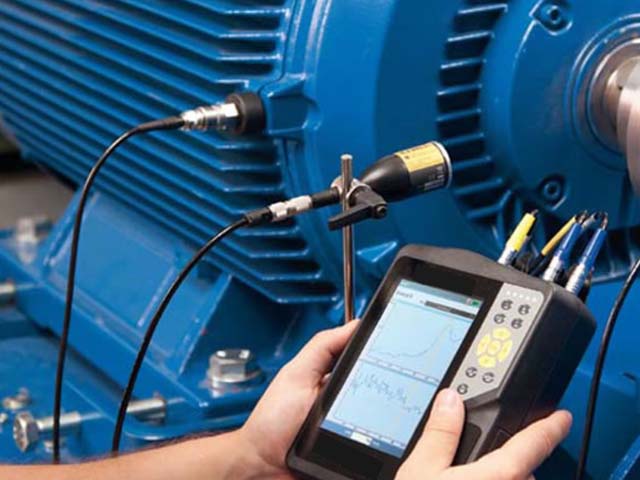
Vibration analysis is defined as a process for measuring the vibration levels and frequencies of machinery and then using that information to analyze how healthy the machines and their components .
Anytime a piece of machinery is running, it is making vibrations. An accelerometer attached to the machine generates a voltage signal that corresponds to the amount of vibration and the frequency of vibration the machine is producing All data collected from the accelerometer goes directly into a data collector (software), which records the signal as either amplitude vs. time (known as time waveform), amplitude vs. frequency (known as fast Fourier transform), or both. All of this data is analyzed by computer program algorithms, which in turn is analyzed by engineers or trained vibration analysts to determine the health of the machine and identify possible impending problems like Unbalance
- Bearing failures
- Mechanical looseness
- Misalignment
- Resonance and natural frequencies
- Electrical motor faults
- Bent shafts
- Gearbox failures
- Empty space or bubbles (cavitation) in pumps
- Critical speeds
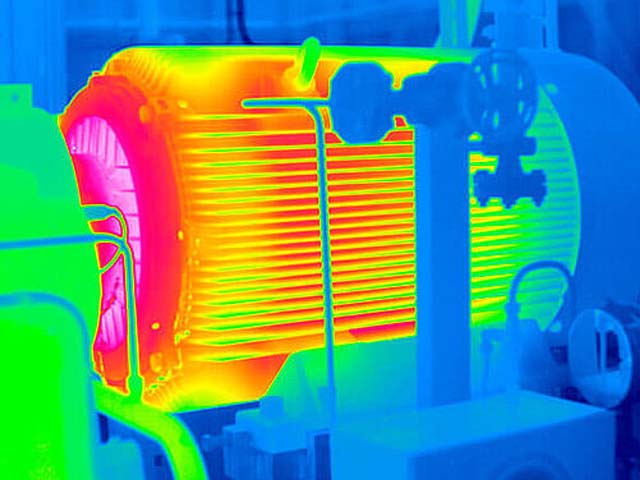
Infrared thermography is the science of acquisition and analysis of thermal information by using non-contact thermal imaging devices. The use of electronic “cameras” to detect radiant energy or heat. Produces a visual image called a thermogram (or heat picture). Thermography Is the science of seeing heat patterns using special electronic cameras Rather than seeing light, these remarkable instruments create pictures of heat. They measure infrared (IR) energy and convert the data to images corresponding to the temperature.
Safety
Opening panels and doors for infrared inspection of live electrical installations greatly increases the risk of arc-flash injury Ensure Proper PPE as per Arc flash Rating.
Typical Electrical Applications
- (3 phase) Power distribution
- Fuse boxes
- Cables & connections
- Relays/Switches
- Electrical motor faults
- BInsulators
- Capacitors
- Substations
- Circuit Breakers
- Controllers
- Transformers
- Motors
- Battery Banks
Typical Mechanical Applications
- Motors
- Pumps
- Heat exchangers
- Bearings
- Gearboxes
- Drive belts
Typical Process Applications
- Refractory insulation
- Tanks and vessels
- Steam systems/traps
- Pipes and valves
- Heaters/Furnaces
- Manufacturing equipment
- Plastics Industry (Molding)
- Pulp & Paper (Rollers,handling equipment, etc)
- Metal Foundry
- Boilers and Reactors
- Research & Development
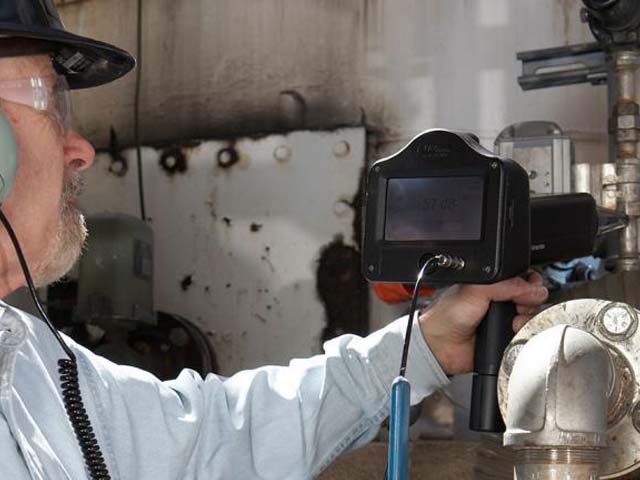
Ultrasound is a technique which enables to hear ultrasound generated due to friction or turbulence in industrial machines. By measuring sound intensity levels (usually as dB), users can obtain estimated CFM values to help calculate leak cost and save energy.
Typical Applications include :
- Pinpointing exact location of Pressure Leaks (Compressed Air, Gas etc.)
- Vacuum Leaks in pipes, vessels, Reactors, Columns.
- Valve seat & stem leak detection.
- Tube leaks in Heat Exchanger.
- Boiler, Condensers, Steam Trap inspection.
- Electrical Inspection & detecting Arching, Corona & Tracking etc.
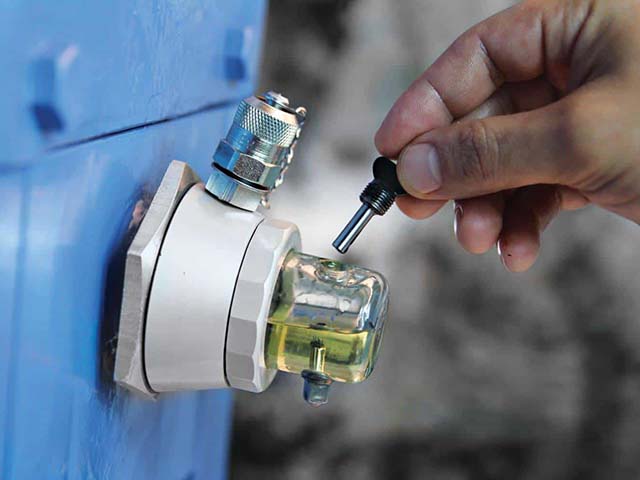
The lubrication management concept takes a holistic approach to lubrication. In this approach, lubricants are considered not as consumables to be purchased at the lowest price, but as an asset to be managed and nurtured. This nurturing process starts the day the lubricant arrives onsite, and ends the day the oil is drained from the component and disposed of appropriately. In doing so, the key areas to consider include:
- Lube standards, consolidation and procurement,
- Lube storage and handling,
- Oil sampling techniques,
- Contamination control,
- Training, skill development and certification,
- Lubricant analysis,
- Lubrication/ re-lubrication standards and best practices,
- Program management,
- Procedures and guidelines,
- Program goals and metrics,
- Safety and disposal guidelines and best practices, and
- Continuous improvement.
The main cause of equipment failure is due to
- Incorrect Lubrication,
- Foreign material,
- Corrosion,
- Bearing failure,
- Inadequate maintenance,
- Continuous / shock overloading.
Lubricants apart from performing its vital functions, it helps to measure performance ability and gives indication of machine health condition. Some of the key parameters tested are:
- Viscosity
- Viscosity Index.
- Total Acid No.
- Total Base No.
- Water Content
- Wear Debris Analysis
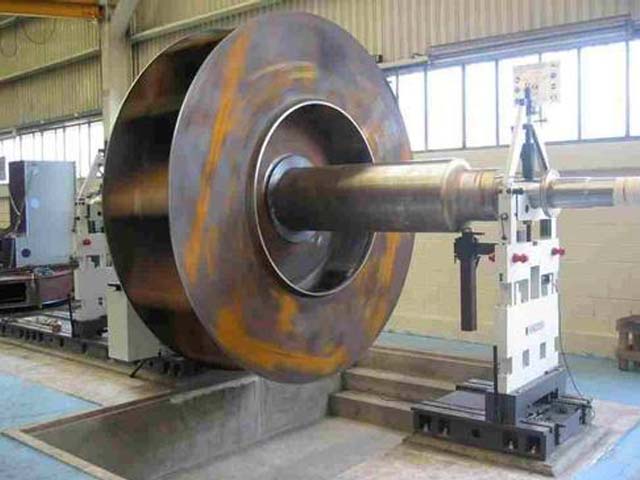
Unbalance is one of the most common causes of machinery vibration and is present to some degree in all equipment. The mass distribution of rotating component is very vital in achieving reduction of unwanted forces transmitted to shaft and its support bearings.
Balanced rotor will ensure equipment reliability. The balancing activity will be carried out in actual machine mountings without dismantling the rotor at actual operating conditions.
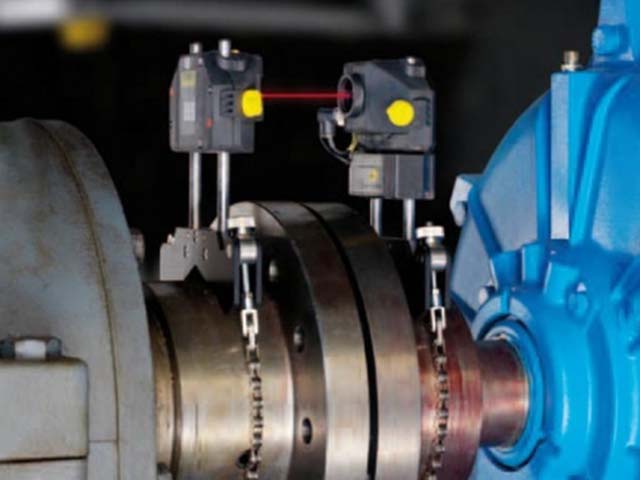
Shaft alignment, often called “coupling alignment”, is a process to make two or more rotating shafts co-linear, or in the same straight line, both vertically and horizontally. Shaft alignment can be done utilizing several methods and tools, such as straightedges, calipers, dial indicators, optics, or laser systems. Of these, laser shaft alignment is the fastest and most accurate.
Power transmission through drive and driven shafts – shaft alignment / drive and driven pulleys – pulley alignment, need to be within tolerance to operate the equipment with acceptable level of vibration thereby increasing the life of machine components and save energy.
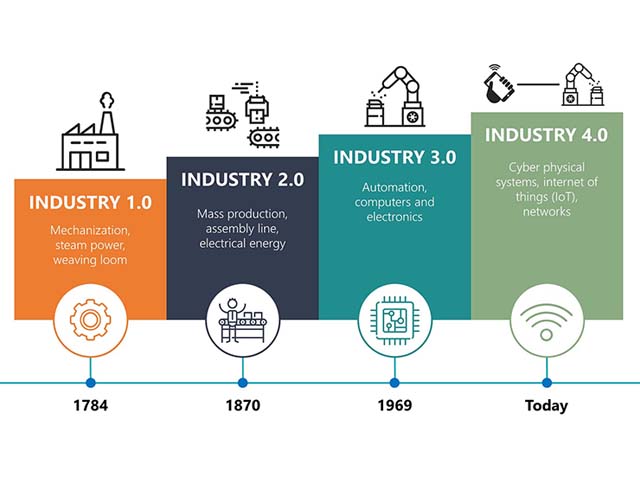
APM 4.0 is transforming the way companies produce goods to achieve the maximum level of production efficiency while also increasing sustainability With Industrial Internet of Things (IIoT), organizations can do much more to understand their asset structure and relationships. Because assets can talk to each other and communicate data, businesses can understand cause, effects, faults and performance on a much wider and more detailed scale. Something commonly known as Asset Performance Management (APM) 4.0.
- It helps to maximize your return on investment, especially in terms of ensuring that your assets are working safely and reliably with infinite uptime
- It empowers your personnel to respond quickly before any occurrences of downtime or system failures
- It would also help your personnel realize the service intervals of machinery and simulate yearly service costs, thereby ensuring profitable and extended machinery performance throughout its lifecycle

Criticality analysis is defined as the process of assigning assets a criticality rating based on their potential risk of failure.
Criticality analysis lets you understand the asset's potential risks that could impact your operation. It ensures reliability is looked at from a risk-based magnifying glass rather than each person's opinion.
criticality analysis helps organization to understand:
- Customer impact
- Impact on safety and environment
- Ability to isolate single-point failures
- Preventive maintenance (PM) history
- Corrective maintenance history
- Mean time between failures (MTBF)
- Spare parts lead time
- Probability of failure
The analysis should be carried out with all key stake holders in organization from production, quality, safety and maintenance. Once criticality ranking is arrived proper mitigation plan is taken to ensure business continuity.

Root Cause Analysis deals with identifying the origin of a problem and finding a solution for the same so that the problem is treated at the root level where the real cause exists and not only the symptoms of the problem are treated.
Steps to Implement RCA :
- Define the problem
- Collect data relating to the problem. ...
- Identify what is causing the problem. ...
- Prioritize the causes. ...
- Identify solutions to the underlying problem and implement the change. ...
- Monitor and sustain.